I’ve said this before and I’ll say it again. When it comes to productivity, I have always been building systems.
With or without AI. In or out of digital space.
Notes. Notebooks. Notion. Calendars. Journalling systems. ChatGPT tasks.
Once, I even replicated an entire bullet journal system using the iPhone Reminders app (Yes, it is possible).
So when I started building CurioBot, it was not because I lacked productivity systems. What I struggled with was staying with the same routine when other, more important sparks were calling to me.
Drifts happen for a reason. Be it avoidance, overload, or plain curiosity. Sometimes they take you somewhere you could not have planned. So what I need is not a system that punishes the drift. I do not need to be shamed into following a routine when there are better things to pursue.
I did not need an accountability partner asking, “Did you do the thing?” I needed something that could catch the spark when it appeared.
I needed a system that helps me see where I drifted, understand what pulled me there, and decide whether to come back or simply let it be. That is where the idea of CurioBot started evolving.
At this point, most of my life is in Notion already, in note form.
So CurioBot became a lightweight layer around my Notion control centre. It helps manage the tasks, events, random thoughts, and attention items that were already fighting for a place in Notion, where they would not get lost. It helps me interact with that system through limited, low-resistance touchpoints: check-ins, nudges, and quick captures, all without making it noisy.
When I first saw Victoria Lo’s OpenClaw series, I only wanted to try it as a challenge. At first, I thought I would follow along and build an amazing Telegram-based assistant. But quite quickly, I realised my use case was different. I did not need to build another bot. I was trying to build a way back to the system itself.
I’m no longer sure I can call CurioBot just a consistency buddy. It’s actually a way to preserve continuity in the system while allowing natural drifts.
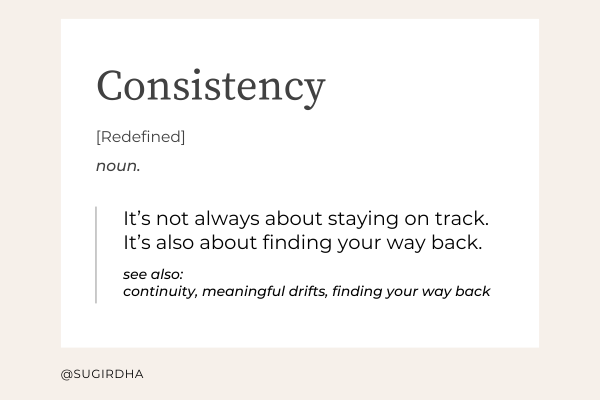
Consistency is not always about becoming a perfectly routine person. Sometimes it is about finding your way back after exploring a new terrain.
Because the important question is not: “How do I force myself to show up the same way every day?”
It is: “When I lose the thread, how easy is it to come back?”